
Pass Cisco CCNA Routing and Switching Certification Exam in First Attempt Guaranteed!
Get 100% Latest Exam Questions, Accurate & Verified Answers to Pass the Actual Exam!
30 Days Free Updates, Instant Download!

200-301 Premium Bundle
- Premium File 747 Questions & Answers. Last update: Oct 19, 2026
- Training Course 271 Video Lectures
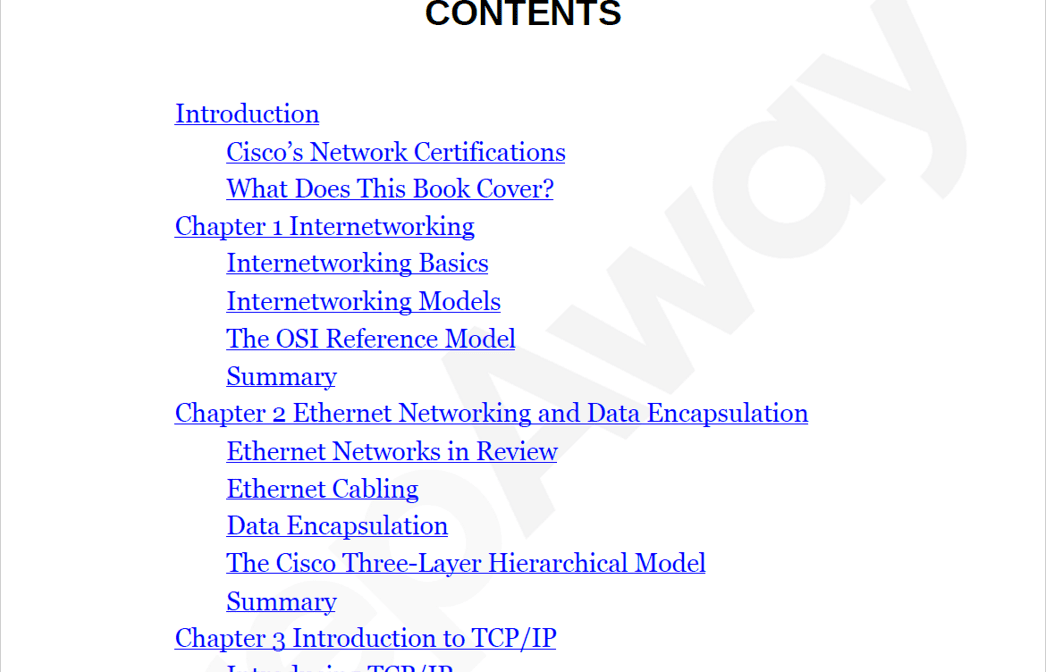
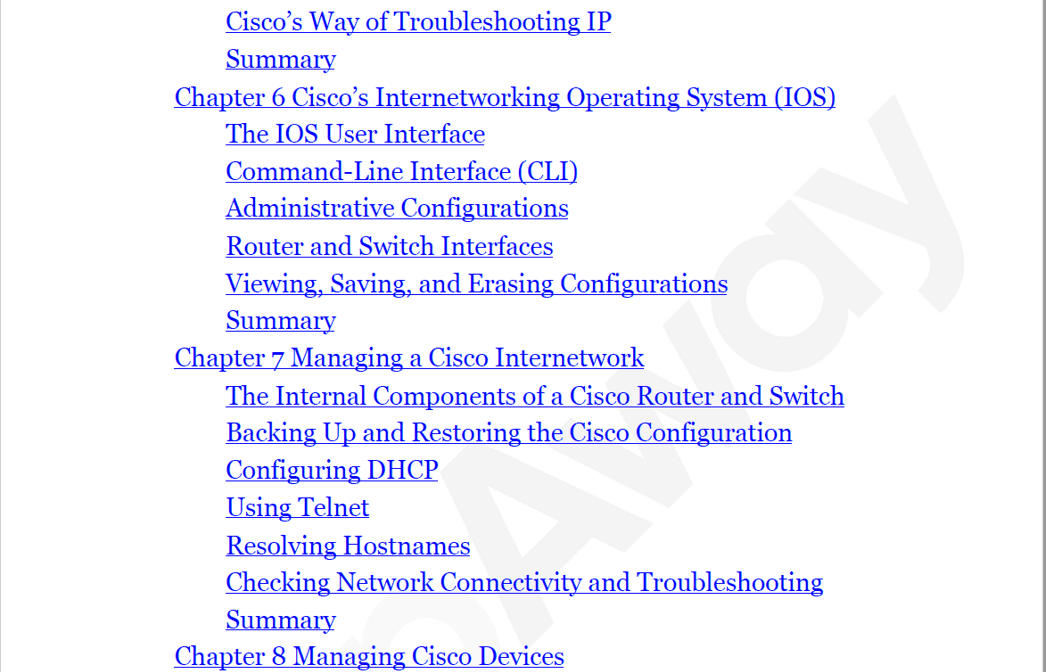
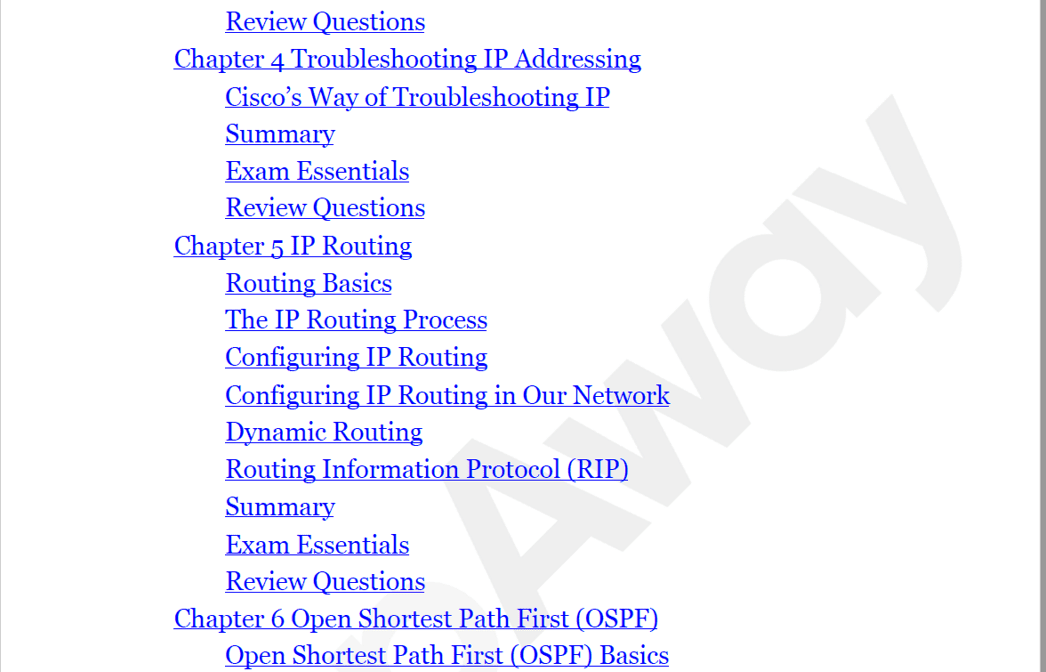
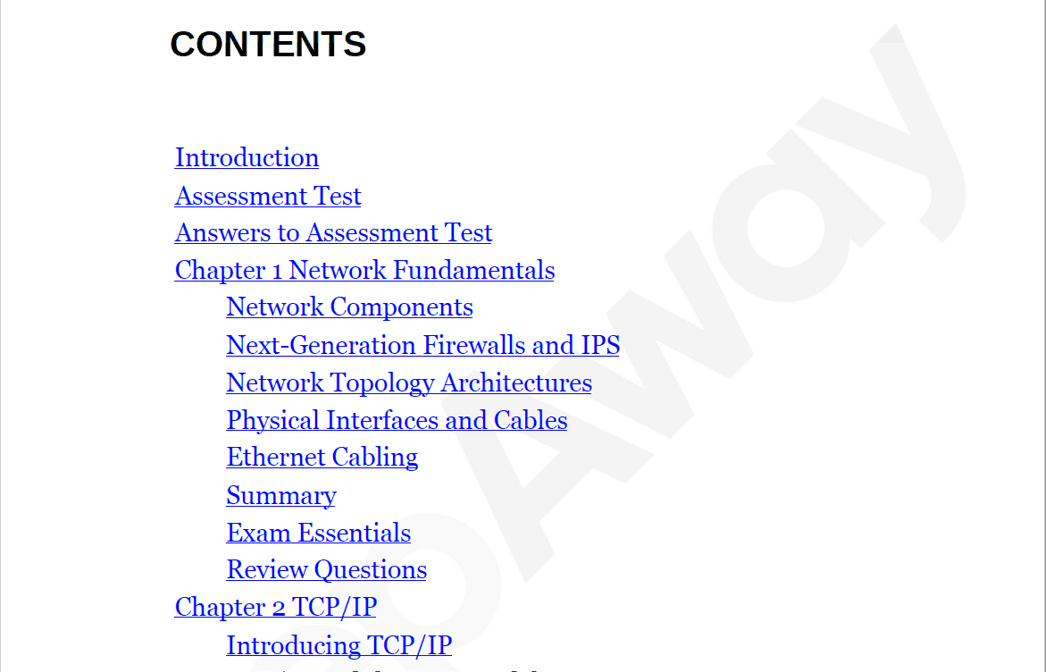
- Study Guide 1969 Pages
200-301 Premium Bundle
- Premium File 747 Questions & Answers
Last update: Oct 19, 2026 - Training Course 271 Video Lectures
- Study Guide 1969 Pages
Purchase Individually
Premium File
Training Course
Study Guide
200-301 Exam - Cisco Certified Network Associate (CCNA)
| Download Free 200-301 Exam Questions |
|---|
Cisco CCNA Routing and Switching Certification Practice Test Questions and Answers, Cisco CCNA Routing and Switching Certification Exam Dumps
All Cisco CCNA Routing and Switching certification exam dumps, study guide, training courses are prepared by industry experts. Cisco CCNA Routing and Switching certification practice test questions and answers, exam dumps, study guide and training courses help candidates to study and pass hassle-free!
CCNA Routing and Switching: The Retired Path and Today’s 200-301 CCNA
CCNA Routing and Switching is a retired Cisco certification. Cisco retired the old 100-105 ICND1, 200-105 ICND2, and 200-125 CCNA exams in February 2020 and replaced the fragmented associate portfolio with the current CCNA certification. Candidates preparing now should use the active 200-301 CCNA blueprint instead of treating old Routing and Switching study plans as current exam requirements.
Legacy CCNA R&S material is still valuable when it teaches durable fundamentals such as Ethernet, VLANs, spanning tree, IPv4 addressing, subnetting, routing, OSPF, NAT, and troubleshooting. It becomes misleading when it implies that the retired two-exam ICND route still exists or when it omits the security, wireless, automation, programmability, and controller concepts now included in the unified associate certification. The broader Cisco certifications portfolio should be used for current progression decisions.
Why Cisco Retired the Old Routing and Switching Label
The older certification structure separated networking into many associate tracks, including Routing and Switching, Security, Wireless, Data Center, Collaboration, and Service Provider. Cisco’s 2020 redesign consolidated much of that baseline knowledge into one CCNA. The change reflected the reality that modern network engineers encounter security, wireless, APIs, virtualization, and software-defined concepts even when their primary job is routing and switching.
This does not mean classic networking became less important. It means the foundation widened. A candidate still needs to understand switching and routing deeply enough to explain packet flow, but now also needs to understand how those networks are managed, secured, automated, and connected to wireless users and services.
Keep the Fundamentals That Still Transfer
Ethernet behavior, MAC learning, VLANs, trunks, spanning tree, EtherChannel, IPv4 subnetting, IPv6 basics, static routes, OSPF, NAT, DHCP, DNS, and first-hop redundancy remain useful concepts. Old lab exercises that force you to predict forwarding or troubleshoot reachability can still build strong instincts.
The PrepAway discussion of IPv4 subnetting is a good example of durable material. Address planning and prefix reasoning remain relevant even though the certification name changed. The key is to separate timeless networking logic from retired exam logistics.
Do Not Carry the Old Exam Structure Forward
The former CCNA Routing and Switching path could be earned through the ICND1 and ICND2 route or the composite 200-125 exam. Those exams are retired and are not valid for new certification or recertification. The current path is a single 200-301 exam.
The PrepAway article on the transition to 200-301 is useful historical context. In practical terms, candidates should remove old schedule assumptions, retired exam codes, and outdated topic boundaries from their study plan before using any legacy course or book.
Modern CCNA Includes Wireless and Security Fundamentals
Routing and switching alone no longer describes the associate skill set. Current CCNA candidates need to understand wireless architectures and client access, common security threats, device hardening, AAA concepts, access control, VPN and firewall basics, and secure management. These topics are not expert-level, but they ensure that foundational network work does not ignore security or mobility.
A useful study method is to follow a user connection from access to application. On wired networks, examine switchport state, VLAN, addressing, gateway, routing, DNS, and policy. On wireless, add SSID, association, authentication, radio conditions, and controller policy. That end-to-end reasoning is more modern than a lab focused only on configuring a switch and router in isolation.
Automation Is the Most Obvious Difference From Old CCNA R&S
Legacy material rarely treated APIs, JSON, controllers, or configuration management as core associate skills. The current exam does. Candidates should understand the purpose of controller-based networking, basic REST API concepts, common data formats, and the operational advantages of repeatable automation.
The PrepAway material on network automation is useful supplemental reading. At CCNA level, concentrate on what automation changes operationally: consistency, scale, validation, and centralized control. You do not need advanced software design to understand why a structured API workflow differs from manual configuration.
Old Routing and Switching Labs Can Still Build Troubleshooting Skill
A legacy topology with VLANs, trunks, spanning tree, routed links, OSPF, and NAT remains valuable if you use it to reason. Predict the forwarding path. Introduce one fault. Decide what evidence should change. Then prove the fault from device state. This is much better practice than typing a complete known-good configuration from memory.
The PrepAway discussion of routing and switching skills in daily network work is still relevant when interpreted as role context. The technologies continue to support modern infrastructure even though the certification name and scope have evolved.
The Current Progression Is CCNA to Role-Specific Professional Tracks
Under the modern program, CCNA does not branch into a named “Routing and Switching†professional certification. Enterprise-focused candidates typically continue to CCNP Enterprise, where the ENCOR core and concentrations cover advanced routing, SD-WAN, design, automation, and other enterprise domains.
Other candidates may move toward collaboration, data center, security, service provider, wireless, automation, or cybersecurity. The PrepAway article on Cisco certification paths is useful for comparing those directions after the common associate foundation.
How to Update a Legacy Study Plan
Start by keeping the durable network fundamentals. Next, map each topic against the current 200-301 blueprint. Add wireless, security, automation, APIs, controller-based networking, and current device behavior. Remove retired exam-specific trivia. Then rebuild the labs so that multiple domains interact instead of studying switching, routing, and services as unrelated chapters.
The PrepAway material on network simulation can help create that integrated practice environment. Use the lab to observe protocols and failures, not merely to collect successful configuration screenshots.
Current Exam Preparation Should End With Packet-Flow Reasoning
For final review, choose representative flows: client to gateway, branch to server, internal host to internet, wireless user to application, and management station to network device. Explain each forwarding and service dependency in order. Then predict what happens if one VLAN, route, DNS entry, access rule, or service fails.
This approach preserves the strongest part of the old Routing and Switching tradition—deep packet-flow understanding—while updating it for the broader skill set Cisco now expects. The certification name may be retired, but disciplined routing and switching knowledge remains one of the most useful foundations a network engineer can build.
Legacy CCNA material often contains useful command-line drills, but current preparation should add verification and intent. When you configure a trunk, state which VLANs need to cross it and why. When you configure OSPF, identify what reachability the adjacency should provide. When you add NAT, explain which addresses are being translated and which traffic should remain untranslated. This turns rote procedures into transferable troubleshooting skill.
Current networking also expects more comfort with controller-based systems. Even at associate level, understand that an intent-based or centrally managed platform can separate policy from device-level implementation. Learn the basic benefits—consistent configuration, centralized visibility, automation, and assurance—while remembering that the physical and IP underlay still has to work. Controller visibility does not replace packet-flow reasoning.
Security should be integrated into older labs. Add secure management access, basic ACLs, port security concepts, segmentation, and logging. Then test what happens when a rule is too broad or too restrictive. The old routing-and-switching curriculum often treated these topics as adjacent specialties, but the current CCNA expects candidates to recognize security as part of normal network administration.
Use current career progression as another filter for legacy content. If you plan to move into enterprise networking, identify which old routing and switching skills support ENCOR and ENARSI. If you plan to work in wireless, collaboration, data center, or service provider environments, keep the common IP and switching foundation while shifting later study toward that domain. A retired certification can still be a useful skills map if you stop treating it as an active credential.
Before scheduling the current exam, perform a blueprint reconciliation. Take your legacy notes and mark each item as current, expanded, reduced, or retired. Add new topics from 200-301, especially automation, wireless, security, IPv6, and controller concepts. This prevents a common preparation failure: feeling confident because old material is familiar while leaving entire modern domains under-studied.
Another durable lesson from the retired path is the value of troubleshooting in layers. Verify physical state first, then Layer 2, addressing, gateway behavior, routing, services, and policy. Modern networks add wireless, controllers, and automation, but the layered method still prevents random configuration changes. Use it as the bridge between old R&S habits and current multi-domain CCNA scenarios.
When comparing old and new objectives, pay special attention to terminology changes. A technology may still exist but appear under a broader concept in the current blueprint. Conversely, a familiar exam code may be retired even though its underlying skill remains valuable. Treat Cisco’s active blueprint and retired-exam list as the authority for status, and treat older books as technical references whose claims must be checked before use.
Do not discard basic documentation skills when modernizing an old study plan. Draw simple physical and logical diagrams, record interface roles and addressing, and note why each VLAN, route, or access rule exists. Then make a controlled change and update the documentation. This creates the habit of linking configuration to intent, which becomes increasingly important as networks are managed through controllers and automation rather than one device at a time. Clear intent also makes troubleshooting faster because you can compare the observed state with an expected design instead of guessing what the original configuration was meant to accomplish.
CCNA Routing and Switching certification practice test questions and answers, training course, study guide are uploaded in ETE files format by real users. Study and pass Cisco CCNA Routing and Switching certification exam dumps & practice test questions and answers are the best available resource to help students pass at the first attempt.




plz I need to know about this interesting course help me thanks
I am new here in this forum
Actually i just want to know that only questions available here or also learning videos available for CCNA
Appreciate your reply
thanks
Thanks prepaway and packet tracer !
Nothing. Just to enhance your CV and improve your networking knowledge. That's it.
Thanks.
please anyone help me to convert the 200-125 premium file from ETE to PDF
contact me: [email protected]
my exam after 9 day.
The Premium file not open with me
plz contact me: [email protected]
Thank you Prepaway !
please enrol me for 200-125 Exam - CCNA Cisco Certified Network Associate
REGARDS
please give full information and all details of how to register.
thanks
These questions are vary effective for us
and how to learn the CCNA course free cost of learning with certificates.